Tuesday, January 17, 2012

A "dooring" is not an accident


When I was able to struggle up from the road surface after being knocked off my bike, the first words that came out of my mouth were worthy of any cycling nut: “Is my bike okay?”

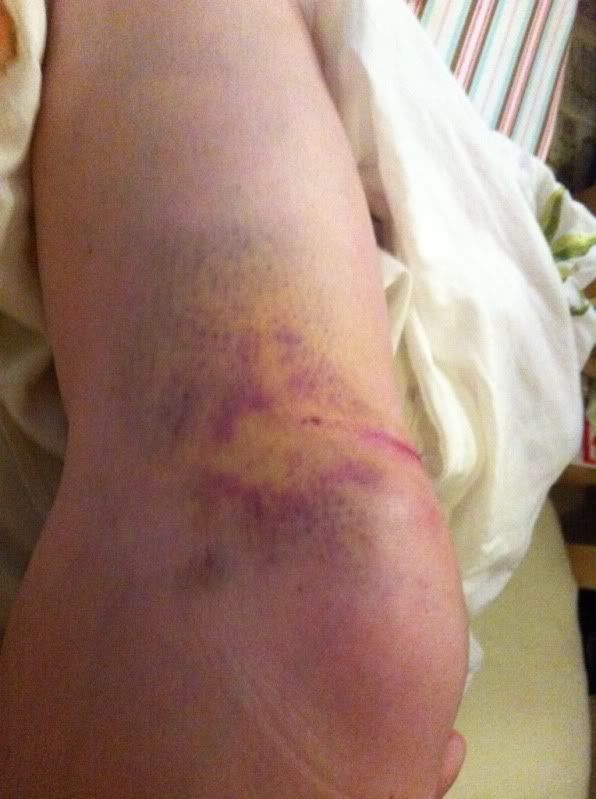
It was – startlingly okay, actually. I fared much worse than the machine. I have stretched tendons and ligaments and bruised bones and atrophied muscles, all of which require considerable sessions of physiotherapy. But ultimately, like my bike, I’ll be okay, unlike James Cross , who was also the victim of an inattentive driver.

I was pleased that there was, coincidental to my accident, a spate of publicity about “doorings.”* I was less pleased at the message of the publicity – that cyclists and motorists shared an equal responsibility to prevent these “accidents”.

Let’s get one thing straight. A “dooring” is not an accident. It is a failure of vigilance, a case of negligence, a lapse of concentration… but not an accident. 
Drivers are required under the law to ensure they do not present a hazard to other road users, and whether drivers like it or not, this includes cyclists.

Furthermore, regardless of how defensively a cyclist rides, the laws of physics do not allow them to avoid a hastily flung door, especially when tram tracks or cars driving too close block the cyclist’s ability to veer right.

Separating cyclists to a cycle lane on the passenger side of parked cars is no answer. These lanes are debris strewn and prone to pedestrians wondering across without consciousness that it is a transit zone. Passengers alighting from vehicles are even less likely to be vigilant for oncoming cycle traffic.

This is first and foremost an issue of driver education and law enforcement.

Drivers make decisions every time they open their door in order to avoid the consequences of being a hazard. Are they on a busy road where their door might be ripped off by a passing tram? Are they on a freeway where a speeding car could throw them to the verge? Is their car parked securely? Drivers need to be educated to make the decision to check not just their rear view mirror but over their shoulder and to ask the question: “Is there a cyclist coming?” When they fail to make this decision, they need the compelling persuasion of a ticket, or charges when an injury occurs.

There is currently insufficient emphasis on the rights of cyclists during driver education. Furthermore, there is little energy invested by police in pursuing people who do not make cyclists’ safety a high priority. After my own incident, a police officer explained to me unapologetically that they would not be pursuing even a failure to give way fine had I not been injured badly enough to attend hospital.

My incident was caused by a driver who turned left in front of me, to park. Although he stopped and was very kind and solicitous, he had no comprehension that he was breaking the law by failing to give way and cutting across another vehicle (me). He had his indicator on, he reasoned, so therefore he had the right of way. In this last week I narrowly missed being collected by another driver who was just about to make the same decision and who clearly had no idea that he was doing the wrong thing, despite me giving him a very asserting stop gesture and shaking my head. The comments sections of newspapers which have given this issue publicity have been replete with people who clearly either don’t know or don’t care that the law is firmly on the side of the cyclists.

Of course it is advisable for all cyclists to ride as sensibly and defensively as possible, and always within the law. Cyclists will continue to be injured and killed, however, until the Police and driving educators place a higher emphasis on driver awareness and accountability.

I was not in fact “doored” – ironically, a near dooring seconds earlier slowed my progress so that the left-turning driver hit me at far less velocity than would otherwise have been the case.

Thursday, December 29, 2011

The joy of falling

I wrote this earlier this year, and I thought of it again when I was knocked off my bike last week:


The joy of falling

Falling over always makes me cry. This is not ideal when you are naturally clumsy. I am forever slipping over that tiniest smear of grease on the kitchen floor, or that one squashed grape in the fruit and veg aisle. 

I don't know how to land gracefully or safely, and it seems that all the rolls of flab in the world won't protect your bony protuberances when you land on them from a great height.

What smarts even more, though, after a comedic (to everyone else) tumble, is the feeling of having lost control, of losing one's grip on the ground, of being powerless and prey to the laws of gravity and pain. Once you are falling, there is nothing you can really do to stop it. When I have fallen, I am left with a lingering feeling of panic, of vulnerability, of shaken confidence in my ability to stride across the world.

When I bought proper cycling shoes and cleats, my sister told me, "You will fall off." When I tried to get on my bike in the back yard and figure out how clamping my feet to pedals on this inherently unstable thing called a bicycle was actually going to work, I cried, and I hadn't even fallen off yet. How on earth was I going to do this? How was I going to manage when the prospect of a fall, and not just from my feet onto the kitchen floor, was a certainty?

I found that the only way to get going and figure that out, was to commit to the clamping, and to the inevitable fall; not to timidly push my bike around the yard, but to get onto the street and get up some momentum and trust that the advice I'd been given and the skills I'd developed thus far would keep me upright for at least a time. 

I pushed my right foot onto the cleat, and lifted it to the top of the stroke. I pushed down hard, simultaneously engaging the clip with the pedal and driving the wheels forward. I had no choice but to follow suit with the left foot, clipping it in with a chunky click and feeling the bike leap forward. 

I rode around the block. 

I didn't fall off. 

I unclipped before I came to a stop at my drive way, and still I didn't fall off. I felt a great wave of hubris wash over me, and it was still with me when I set out for work the next day. I exulted in the feeling of doubled power as my legs pulled up on the pedals as well as pushing down - the dread Mega Hill of Death became a mere molehill and I smirked as I whirred past cyclists who were struggling as I had done just the week before.

Just before my destination, cyclists must negotiate a dreadful intersection near the Arts Centre where they have to cross right over a lane of traffic in order to go straight ahead. At peak hour, the cars are impatient with the bikes, who must weave in and out of them in order to position themselves safely. I am used to darting around and sticking my feet wherever I need in order to jostle for my own rightful position. I did this, but underestimated how much time I would need to free my foot. It stuck fast, the bike slowed, wobbled, and then in a graceful motion of surrender, keeled over to the side, taking me with it, fortunately onto the grassy verge. 

With no physical damage, and cars and snickering pedestrians everywhere around me, I managed to extricate my feet, and walk, duck like in my treacherous shoes, over to the footpath. My bravado had completely left me and my whole body was shaking. I knew that I had to get to my destination and I wasn't going to get there clattering around on cleats. I had to get back on the bike.

The rest of my ride was tentative, but I got there. I had learned that I needed to give myself time to get my feet down, to anticipate that I was in a situation where I might need to just click out and stay out for a while, that I couldn't rely on my quick reflexes to absorb my lack of planning. I felt a larger lesson seeping into my bones.

On the way home, I fell off again. This time I was trying to do a standing start up a steep hill, and I couldn't get enough momentum. My free foot slipped on the pedal rather than clicking in, and I toppled, this time onto the road, and I fared worse than in the morning.

The next day, my legs and hips were a mass of bruises, and I had wrenched my ankle hard enough for it to swell badly, and ache. I began to wonder if I had done the right thing in investing in these shoes.  Sure, the hills were easier and the snazzy equipment made me feel like a real cyclist, but wasn't it easier just to keep on with the sneakers and old pedals? Maybe I should just give it up. My sister was doubly right. And what if I fell of again, and again, and again? What if I could never get the hang of it? How stupid would I feel then? How incompetent! Uncoordinated! Because, after all, that's what I am!

A couple of months ago, I would probably have admitted defeat. The pain of falling, and the possibility - heck, probability - of it happening again would have put me off. The phrase "comfort zone" has real meaning here.

However. I've been having dreams about clipping in and clipping out. Whilst lying in bed I've been noticing my feet practicing the motions. Every time I stand up or sit down, the aching bruises prompt me to think about how not to fall off. I've rehearsed intersections and hill starts in my head. I've mused about how less humiliated I felt than I thought I would be, and I've remembered the kind hands reaching out and the smiles of solidarity from other cyclists who've been there and will probably do that again themselves.

This morning I rode in again. I planned ahead. I was cautious and careful. I respected my limitations, and the bike's. I became mindful of my feet melded to the cranks, and aware of how my body and my bike were moving through space. 

And I didn't fall off. But somehow, I don't think it would have mattered if I had.
 

Sunday, February 6, 2011

Whole of the moon - more navel gazing

When I was a teenager, I had complex fantasies of being someone else. I wrote characters into my never-finished books who were enigmatic, where I was just weird; confident where I was aloof; popular where I was desperately trying to fit in. My characters were smart and different like me, but unlike me, they weren't objects of ridicule or disdain, they were physically attractive, and they didn't have a knack of being in exactly the wrong place at the wrong time, saying precisely the wrong thing.

In year 11, I think it was, a song came out called "Whole of the moon," by the Waterboys. The lyrics encapsulated every one of these fantasies:


I pictured a rainbow, you held it in your hands
I had flashes but you saw then plan
I wandered out in the world for years while you just stayed in your room
I saw the crescent, you saw the whole of the moon
The whole of the moon

You were there in the turnstiles with the wind at your heels
You stretched for the starts and you know how it feels
To reach too high, too far, too soon
You saw the whole of the moon

I was grounded while you filled the skies
I was dumbfounded by truth, you cut through lies
I saw the rain dirty valley, you saw Brigadoon
I saw the crescent, you saw the whole of the moon

I spoke about wings you just flew
I wondered I guessed and I tried, you just knew
I sighed and you swooned
I saw the crescent, you saw the whole of the moon
The whole of the moon

With a torch in your pocket and the wind at your heels
You climbed on the ladder and you know how it feels
To get too high, too far, too soon
You saw the whole of the moon, the whole of the moon, hey yeah

Unicorns and cannonballs, palaces and piers
Trumpets, towers and tenements, wide oceans full of tears
Flags, rags, ferryboats, scimitars and scarves
Every precious dream and vision underneath the stars

Yes, you climbed on the ladder with the wind in your sails
You came like a comet, blazing your trail
Too high, too far, too soon
You saw the whole of the moon

I was listening to it on the way home the other day on my bike, zooming down St Kilda Rd at some dangerous rate of knots. And all of a sudden, I realised that the gut-knotting yearning that usually accompanied my enjoyment of the song was gone. Instead, I felt sorry for the glistening persona who is the object of envy in the song.

Because, I can see the whole of the moon now, or most of it, and I can fly higher than I ever really trusted I could. But I didn't just get up and fly. I did wander, I guessed and I tried, and that's why. I don't begrudge any second of the journey of reaching and trying and failing and not being like a comet, dammit, just an ordinary person who wants to get a bit further. And I really do feel like I have the wind at my heels now, for the first time in my life.

Phew.

Friday, January 7, 2011

The ideal me...

I just read this post from David Wright's blog Project 30 Days.
I read it in light of my memory of a post from Hyperbole And A Half - a post which made me cry with laughter but also with grief because under that humour is why I also will never really be an adult.

David says, and I empathise, given the navel-gazing thrust of my previous post:

I’ve wanted to write this blog for a while. But there’s a part of me that screams, nobody wants to read this stuff! It’s self-indulgent in a world full of annoying, self-obsessed navel gazers. People are sick of reading confessionals. There’s a world full of REAL problems! People starving, wars, racism, sexism, enough animal cruelty to make Sarah McLachlan sing a box set’s worth of depressing songs, slavery, and other things far worse than some whiney suburban white guy bitching because he’s not living his ‘Ideal Life.’

Well, he's got a point, hasn't he?

And, really, there is such truth in the advice given by some forgotten-by-me-but-obviously-very-smart-person, that a cure for depression or ennui is to do something good for someone else, and repeat, ten times.

But first you've got to get to that point where you are feel able to do something for someone else, where you are even capable of thinking about someone else, where you aren't tied up in knots with those melancholic feelings of guilt and obsession that are stopping you from doing something for someone else. If there was even time left over from the Stuff You Absolutely Have To Do™.

One of the things that has caused friction between me and my family is the state of the house. Beloved particularly struggles with me on this. He is (either enviably, or insufferably, depending on your perspective) able to  relax or read a book or pursue some pursuit unrelated to housework whilst a room around him is in chaos. (Or as he might call it, "lived in".)

Me, I can't do that. Things have to be right before I get settled in to a more rewarding task. Dishes done. Beds made. Tables straightened. Floor clear. Get the things that Must Be Done, done. Then do the Things You Want To Do.

The trouble is, when those Things That Must Be Done expand to fit every single second of the day, either because of the lack of assistance from those around you or your own increasing neurosis about what is acceptable, then there is no time left over for Things You Want To Do. Or even, Things That Are Good For You. Like meditation, exercise, or doing things for someone else. Or, heaven forbid, prayer.

I often feel that I am at the mercy of Things that Must Be Done. I resent those things, even when I have invented them, even when nobody else really gives two hoots whether they are done, or even notices when they are done. But those Things take on such importance! I can't shake them!

So David Wright's blog is a blessing and a curse to read. Because my understanding of what is the ideal me is so skewed at the moment. I can't trust myself to distance my idea person from a person who fulfils all the Things That Must Be Done. Those things of which I might be ashamed, might also be the things which if I could just embrace and accept them a little more, might actually make me a little more ideal. More of a slob, less disciplined, less ... contained ... but maybe easier to live with.

2011 will be the year for...

...I have absolutely no idea.

When I got home from our holiday at Point Lonsdale this week (our first proper family holiday for years) I had a smallish meltdown. And then a cry. Neither of those things sound terribly unusual I suppose, but crying for me isn't a normal thing, and melting down is usually what happens before the holiday, not when it is finished!

I am going back to the job I love on Monday, I am surrounded by people I love, I am in a home I love, and yet (o first world angst, you are my friend) I feel vaguely disconnected from it all. No, not vaguely. Intensely, pointedly and dramatically disconnected.

Yes, I am taking my meds regularly. Yes, I am getting lots of exercise. Yes, I'm eating well. I have no bloody idea what's going on. Perhaps 2011 will be the year for figuring out what the bloody hell is going on. Maybe I need to figure out what I'm going to do when I grow up.

Thursday, April 1, 2010

Because not enough people are telling women what to do.

30 Things Every Woman Should Quit Doing By 30

Lists like that enervate me. Does anyone feel empowered by reading a laundry list of all the things that women do wrong when they hit that Tragic Age™?

I've come up with my own list of what it would make me happy to see every woman do or feel by the time she is thirty years old:

  1. Eradicate the word "should" from her vocabulary.
  2. Throw her own birthday party, and call out those close to her who forget it, and not in a forgiving, gentle way. And refuse to take responsibility for her partner remembering everyone's birthday, too.
  3. Look at herself in the mirror and think, "I'm darned sexy".
  4. Have a partner who says the same thing to her - all the time.
  5. Share her bed with whoever she likes, be it a partner, a baby, all her kids, the dogs, a teddy, or just her own lone, comfortable self.
  6. Celebrate every relationship she's ever had, with no regrets.
  7. Laugh at the ways she's like her parents, but continue to reject the values they have which she doesn't share.
  8. No longer be subject to male privilege in just about every facet of her life, or be called a lesbian or a man hater when she calls a jerk who happens to be a man, a jerk.
  9. Learn to shake the dust off her feet and not feel like she has to be polite to people who made her life miserable for any amount of time, at any point in her life.
  10. Be treated with respect by the health professionals who have access to her girlie bits.
  11. Be joyous in her skin, regardless of how dry or wrinkled it is.
  12. Be forgiving of herself when she makes a twit of herself, and be forgiving of others too.
  13. Explore her emotional reactions to people in all sorts of spheres, without shame.
  14. Be confident she knows enough to run her life competently.
  15. Celebrate if she has a parent she is close enough to, or who is still alive, to be called "mummy" or "daddy".
  16. Celebrate her siblings, and find others to be close enough to if she doesn't have any.
  17. Be immune from people expecting her to look a certain way before she can get by.
  18. Know that the pay disparity and superannuation disparity will be resolved so that she will no longer earn so much less than men in the same role and have so much less to retire on.
  19. Not be expected to be the rock on which a man can build his life, or be sneered at if she fails to play the role of the damsel in need.
  20. Cease sticking at things because of guilt or duty and nothing else.
  21. Use every human interaction, in person or online, to make the world a better place.
  22. Never feel like she has to put out because a guy picked up the tab.
  23. Celebrate the life she has, and the lives of those around her.
  24. Expect people to love her and treat her with respect, whether it's her birthday or just plain Tuesday.
  25. Be surrounded by people who validate her broken heart, and smile when she learns to smile again.
  26. Never be looked down on or judged again by someone because of a number on the scale.
  27. Not be dragged into classist ideologies about "cheap" or "classy" but live according to her principles and with dignity.
  28. Be prepared to take risks, with a hefty back up plan.
  29. Be able to look at motherhood, either for herself or her predecessors, with honesty and generosity, rather than the overhyped expectations put on mothers today. And if she's got kids, quit blaming herself for all their issues.
  30. Remember that people of all ages have a wonderful perspective on the world.

Sunday, January 31, 2010

The name of my blog says it all

Why are we still having this conversation?

The subject matter - balancing life and work and kids and leisure and all the rest of it - is a universal issue, which affects men and women alike. The article itself admits,
According to the latest figures from the Australian Bureau of Statistics, 47 per cent of women and 43 per cent of men often or always feel rushed or pressed for time. It's even higher for two-parent families with young children; 67 per cent of mothers and 61 per cent of fathers feel frequently or constantly rushed, though the bureau doesn't specify whether they're working or not.
The difference is under ten percent, which one might even believe surprisingly even, given that women still generally bear the lion's share of the homekeeping and childrearing burden, regardless of their employment status.

And yet, the lead for the article says,
Job plus kids plus house plus spouse - is the modern woman's dream of having it all really a nightmare?
The article then goes on to describe some women in very family-unfriendly employment who found themselves unable to balance what they felt they needed to do with their families, and their careers. Meetings, holidays, out of hours demands... it made it impossible for them to feel happy and they felt that they weren't performing either role well.

Here's a surprise - when you work in a job that is unfriendly to family dynamics, where days are long, holidays are few and interruptions to private life are endemic, it is going to impact on how you parent your children. This applies to fathers and mothers, pretty much equally.

So why is this framed as a maternal issue, so fraught for the women who "want it all"?

I'll tell you why.

It's because we as a society have fetishised our fantasy of ideal Motherhood to the detriment of fatherhood and the mother's personhood. When a woman becomes a mother, society demands that she shed her unique qualities as an individual and begin to fit a narrow stereotype. From the first time you are called "Mum" by your pre-natal healthcare provider, you assume this mantle of Mother, and it will never leave you. (I'm not saying that's necessarily a bad thing.)

And what Mothers are required to be is: self sacrificing; self effacing; focused on their children; prepared to settle; lacking ambition. Fathers are expected to be these things too - but not to the exclusion of their individuality and the lives (generally) that they were living prior to having children.

So, in the article, we have Jane, and Tim, both of whom were initially stay at home parents, but who both decided in their individual families that it didn't suit them. Now they both work part time.

Tim and his partner Kate are both working part time and caring for the children together. Tim is described as "helping" with childcare.

But Jane, who works part time, is described as "juggling". Tim's quote is about how his colleagues at work perceive him. Jane's entails the impact of her lifestyle on her child - albeit a relatively positive one regarding how well traveled he is.

The article talks about the next generation of girls who will be mothers in years to come:
''Teenage girls … (are) telling us everything is becoming more important,'' researcher Betsey Stevenson told CNN. ''They're telling us that being a good child, being a good parent when they grow up, being a leader in their community, being a good employee, all of these things have become more important and what it's costing them is time for leisure.''
So just whose expectations are we dealing with, here? Generations of women with an entitlement problem, who are selfishly aiming to stuff their lives full of everything they want, and hang the consequences.... or are we looking at generations of women who are consistently being asked to clear a bar that men are rarely even asked to take a run at? Are women really trying to have it all, or seeking some kind of ever-retreating acceptance for whatever activities they have in their lives, be it motherhood, work, hobbies or as a spouse?

And how are these ridiculous expectations and uneven burdens supposed to lead to anything but guilt?